Editor Note
At iBoltWatch, our goal is to provide transparent troubleshooting and optimization strategies for every generation of Apple device. This piece was meticulously reviewed to ensure all ISO testing standards and watchOS diagnostic updates match official technical specifications. We highly recommend utilizing our battery health tools mentioned below to verify your hardware integrity before exposing your watch to moisture.
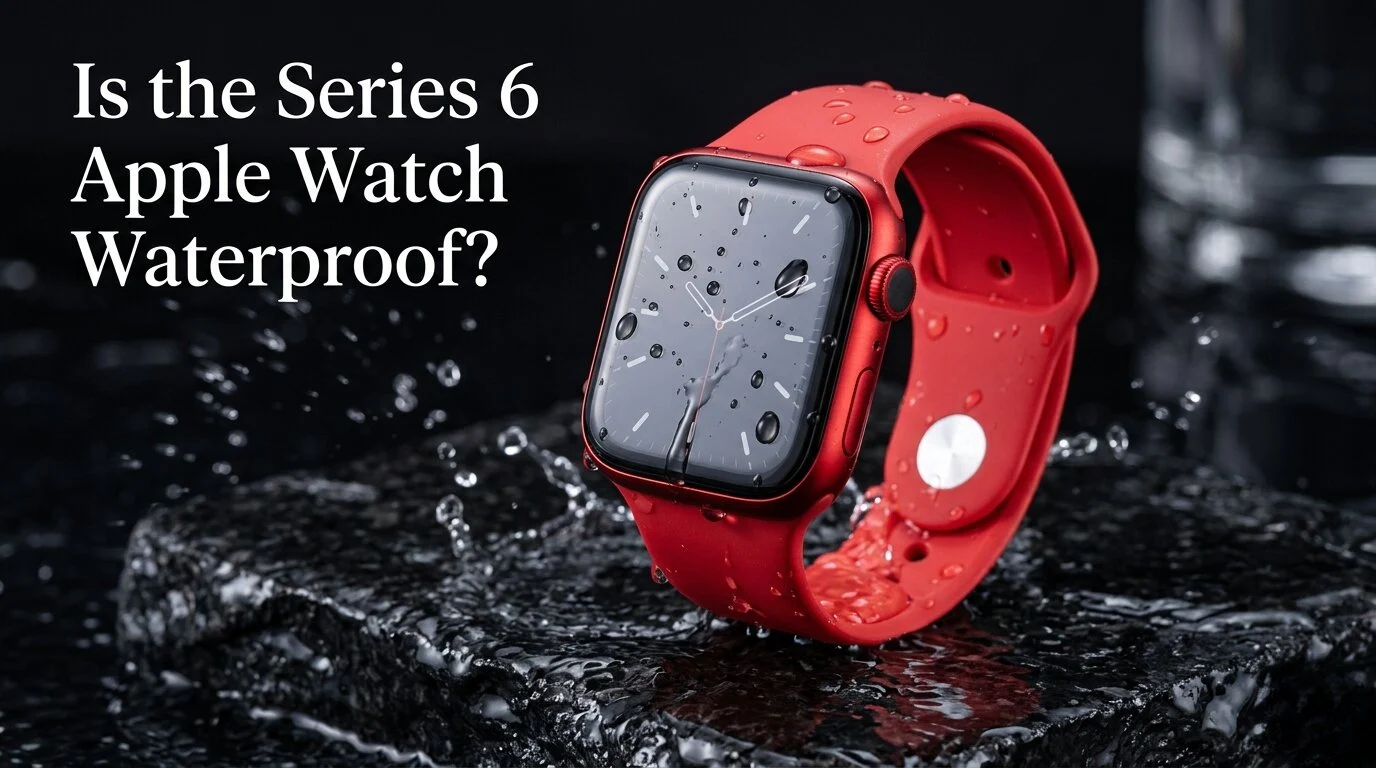
Here is time saver quick answer to know that” Is the Series 6 Apple Watch Waterproof”?
Quick Answer: The Apple Watch Series 6 is water resistant up to 50 meters (WR50), not waterproof. It can handle swimming and rain, but it is NOT safe in saunas, hot showers, saltwater surfing, or after a 3rd party repair. If your Series 6 is 4+ years old, its seals may already be weak , proceed with caution.
Most people think waterproof means your watch can go anywhere near water. That is simply not true. Apple itself never uses the word ‘waterproof.’ Instead, they say ‘water resistant’ , and that difference is very important to understand before you jump into a pool.
The word ‘waterproof’ is a marketing myth. No consumer smartwatch is fully waterproof. What you actually get is a rating that tells you how much water pressure the device can survive under controlled lab conditions.
ISO 22810:2010 vs. Real World: What Water Resistance Means for Series 6

The Series 6 carries a WR50 rating, which is tested under ISO 22810:2010 standards. In the lab, the watch is placed 50 meters underwater in still, cold water for 10 minutes. If it survives, it passes.
In real life, water pressure works very differently. When you dive into a pool, the impact creates a sudden pressure spike far greater than 50 meters of still water. Splashing, jumping, and high-speed water all create pressures that can exceed the watch’s rating in seconds.
50 meters depth in a lab ≠ 50 meters of real-world protection. “These specifications serve as a performance benchmark rather than a definitive promise of safety.”
The ‘Aging Seal’ Crisis: Why 2026 is Different from 2020

This is the most important section that almost no other article talks about. The Apple Watch Series 6 was released in September 2020. That means your watch is now over 4 years old , and its internal seals are aging.
Inside the watch, there are tiny adhesive strips and rubber gaskets that keep water out. Over time, these materials break down from heat, sweat, and normal use. A brand-new Series 6 bought in 2020 was much safer in water than the same watch is today.
If you bought your Series 6 used, or if it has lived through hot summers and daily workouts, its water resistance could already be seriously weakened , even if it looks fine on the outside.
A brand-new, unused Series 6 still in the box will have better seal integrity than a heavily used one. If you have any doubt, treat your watch as if it has very limited water protection.
Safe Activities: Can You Swim, Shower, or Surf?

Swimming (Pool vs. Open Water) , Chlorine Risks
Casual pool swimming is generally fine for a Series 6 in good condition. The WR50 rating covers this activity. However, the chemicals in pool water , especially chlorine , slowly eat away at the gaskets inside the watch over time.
Open water swimming adds more risk. Saltwater is more corrosive than fresh water, and the waves create unpredictable pressure. If you swim in the ocean regularly, rinse your watch with clean fresh water after every session.
Always rinse your Series 6 with fresh water after every swim, especially in the ocean or chlorinated pools.
The Shower Debate , Why Temperature and Steam Are the Real Enemies
This surprises most people: hot showers are more dangerous than a swim. It is not the water itself that causes damage , it is the heat and steam. Hot water causes the metal and plastic parts to expand slightly, which can loosen the seals.
Steam is even worse. Steam molecules are tiny and can penetrate gaps that liquid water cannot. Many users have reported speaker and microphone damage from regular shower use, even when the watch showed no visible water ingress.
Avoid showering with your Series 6. The risk of heat and steam damage is higher than most people expect.
Hand Washing and Rain , Low Risk Scenarios
Washing your hands or getting caught in the rain is totally fine. These are exactly the everyday scenarios that WR50 is designed to handle. Short exposure to cool, clean water at low pressure poses almost no risk.
The ‘Repair Trap’: Did You Change Your Battery or Screen?
This is a huge gap that most articles completely ignore. If your Series 6 has ever had a battery replacement or screen repair , especially by a third-party shop , your water resistance rating is gone. Completely.
To re-seal a watch after opening it, you need special adhesive strips, a vacuum press machine, and precise tools that only Apple Stores have. A third party repair shop will reassemble the watch but it will no longer be water resistant in any meaningful way.
A repaired Series 6 should be treated as having zero water resistance. Do not swim or shower with it.
To check if your watch has been opened before you bought it, look for tiny scratches around the screen edges, a screen that sits slightly uneven, or mismatched screw heads on the case back. These are signs of a previous repair.
Chemicals to Avoid: Beyond Just Water
Water is not the only liquid that can destroy your watch. Many everyday products contain chemicals that are far more damaging than plain water , and people use them without thinking twice.
- Shampoo & Soap: These contain surfactants that break water’s surface tension, allowing the liquid to penetrate tiny gaps much more easily than plain water.
- Perfumes & Cologne: Alcohol-based products are very corrosive to rubber seals and adhesives. Even a small splash near the crown can cause damage.
- Sunscreen: Lotion leaves a residue that can seep into gaps around the crown and speaker. It is difficult to clean and builds up over time.
- Insect Repellent (DEET): DEET is extremely aggressive on plastics and rubbers. Never spray it near your watch.
Understanding Water Lock and the ‘Speaker Eject’ Myth
Many people believe that turning on Water Lock makes the watch waterproof. This is completely wrong. Water Lock does only one thing: it locks the touchscreen so water droplets cannot accidentally tap it while you swim.
When you turn the Digital Crown to exit Water Lock, the watch plays a series of tones. These are not just sounds , they are sonic vibrations designed to push water droplets out of the speaker grille. This acoustic vibration serves as the device’s integrated moisture expulsion mechanism.
Water Lock protects your screen from accidental taps. It does NOT add any extra water resistance to the watch hardware.
Series 6 vs. Series 10 vs. Ultra: Who Wins the Water Test?

Not all Apple Watches are created equal when it comes to water. Here is a clear side by side comparison so you can see exactly where Series 6 stands:
| Model | Rating | Depth | Best For |
| Series 6 | WR50 | 50 meters | Swimming, Rain |
| Series 10 | WR50 | 50 meters | Swimming, Shallow Diving |
| Ultra 2 | 100m EN 13319 | 100 meters | Surfing, Scuba, Kayaking |
The Apple Watch Ultra 2 is the only model designed for serious water sports. It meets the EN 13319 diving standard and can handle the pressure of high speed water activities like surfing, wakeboarding, and recreational scuba diving.
Series 6 and Series 10 share the same WR50 rating. If you need serious water protection, upgrading to an Ultra is the only real solution.
Troubleshooting: What to Do if Water Gets Inside?
If water gets inside your Series 6, stay calm and act fast. The first thing to do is turn it off immediately by pressing and holding the side button. Getting power to the components while they are wet causes most of the actual damage.
If the water was salty (ocean) or chlorinated (pool), rinse the outside of the watch gently with fresh, cool water. This removes corrosive minerals from the exterior before they can work their way in further.
What NOT to do: Never put your watch in rice, use a hair dryer, microwave it, or leave it in direct sunlight to dry. All of these cause more damage than the water itself.
Place the watch screen-down on a clean, dry cloth in a room-temperature environment. Let it air dry naturally for 24 to 48 hours before turning it back on. Then visit an Apple Store for a professional inspection.
Check Your Apple Watch Battery Health Before It’s Too Late

An aging battery and weakened water seals often go hand in hand , both degrade over the same 4 year period. Before you take your Series 6 into the water, it is smart to check your battery health first. A battery that has swollen even slightly can push apart the internal seals and compromise water resistance entirely.
Use our free Apple Watch Battery Diagnostic Tool to instantly check if your battery is in safe condition. It takes less than 60 seconds and can tell you whether your watch is still swim-ready , or whether it is time to replace the battery before your next pool session.
Updated Information:
Official Third Party Water Testing Availability:
In recent watchOS updates, Apple introduces a warning that water resistance cannot be checked or resealed by users. However, authorized service centers can now perform specialized pressure tests to verify if your older casing is still secure.
The Swollen Battery Threat:
As lithium ion batteries in the Series 6 cross the multi year mark, they are prone to degradation and slight swelling. Even a microscopic battery expansion will secretly push the screen upward, instantly breaking the waterproof adhesive seal.
The Tap Water Chemical Shift:
Modern tap water in many municipal areas contains higher levels of fluorides and hard minerals. Daily handwashing or rinsing with hard tap water leaves micro deposits around the speaker mesh that can degrade the acoustic mesh over time.
Upgraded Water Lock Mechanics:
Recent watchOS versions have optimized the acoustic pitch used during the Water Lock expulsion cycle. Running the cycle twice in a row is now the recommended developer practice to completely clear deep moisture from the updated speaker cavity.
Community FAQs ( Pain Points Resolved)
Can I wear my Series 6 in a sauna?
No. Saunas combine extreme heat, steam, and humidity ,the exact three things most dangerous to the Series 6. Apple explicitly warns against exposing the watch to steam rooms and saunas. Doing this regularly will destroy the seals and void any chance of a warranty repair.
Why is my speaker muffled after swimming?
This means water is sitting in the speaker grille. Use the Water Lock eject feature by turning the Digital Crown to trigger the sonic vibration. If the sound is still muffled after 2 to 3 eject cycles, leave the watch screen down on a dry cloth for several hours. Persistent muffled sound may signal internal water damage.
How long can Series 6 stay submerged?
The ISO test uses 10 minutes at 50 meters in still water as the benchmark. Apple does not specify a maximum time limit for shallower depths, but longer exposure always increases risk, especially for an older or used watch. For swimming sessions, the WR50 rating is adequate , just do not go diving with it.
Conclusion: Should You Take the Risk?
The short answer depends on how old your watch is and how it has been used. A lightly used Series 6 in original condition can still handle casual swimming and rain. But a 4 year old, heavily used watch with any prior repairs should stay as far from water as possible.
The key rule is simple: the older the watch, the less you should trust its water resistance. Use the comparison table above to decide if it is time to upgrade to a newer model with fresh seals.
Bottom Line: Series 6 is safe for casual swimming and rain if it is in original condition. Avoid hot water, chemicals, saunas, and any watch that has been repaired. When in doubt , take it off.
Author Note
As a wearable tech analyst who has tracked Apple Watch hardware longevity for years, I have seen hundreds of older devices fail from simple pool sessions. The reality of hardware aging means a device that was perfectly safe at launch requires much more caution today. I wrote this guide to give you the honest, data driven truth about your device’s limits so you can avoid a costly mistake.