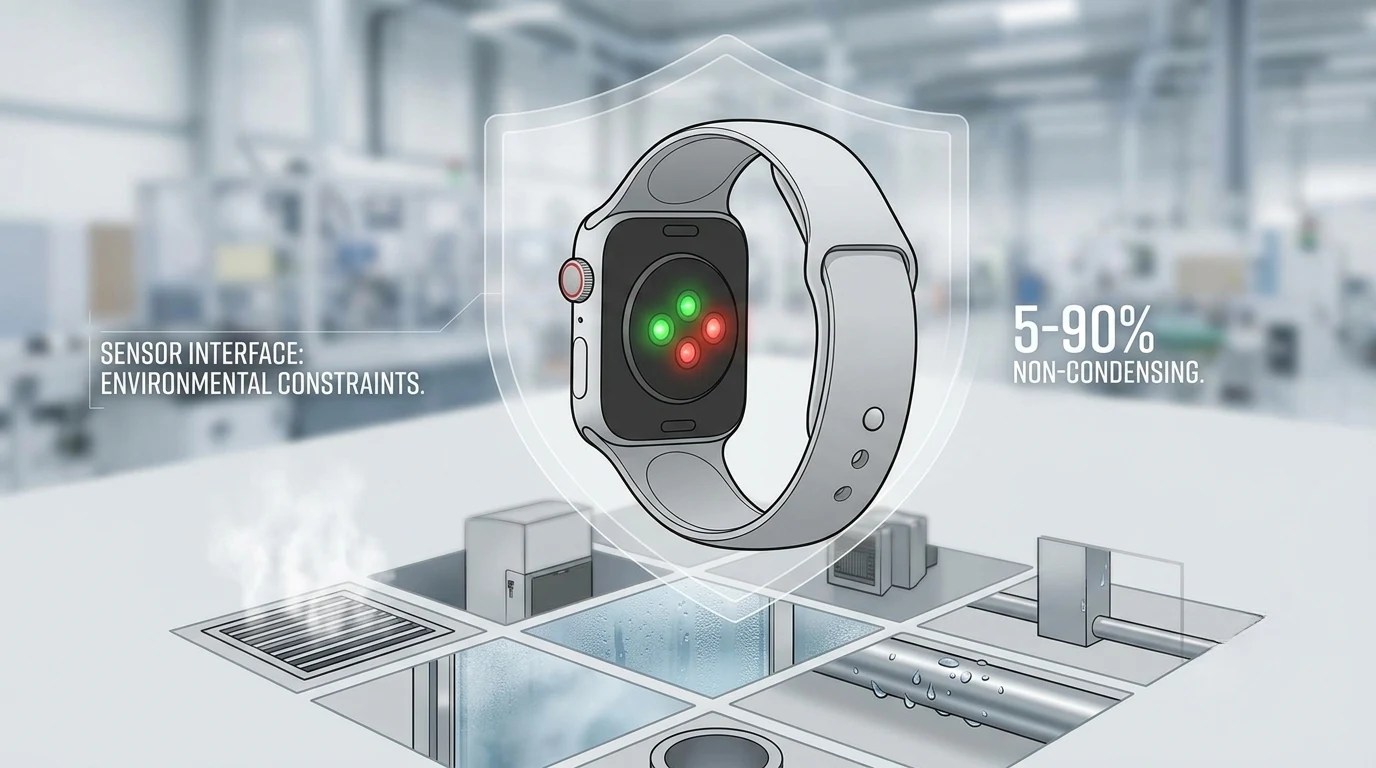
| Quick Answer: sensor reliability of Apple Watch in industrial humidity is limited. The device is rated for 5 to 90% non condensing humidity only. In real industrial settings , where workers move between hot production floors and cold storage , condensation forms inside the watch, disrupting the heart rate and SpO₂ sensors. Use it as a wellness assistant, not a certified safety tool. |
Introduction: The Rise of Wearables in Industrial Workplaces

More factory workers, warehouse staff, and manufacturing teams are now wearing Apple Watches on the job. They use them to track heart rate, blood oxygen (SpO₂), and stress levels during long shifts. It is a smart idea , but humidity is a hidden factor that most people never think about.
Industrial environments are full of steam, chemical vapors, and rapid temperature changes. These conditions push sensor reliability of Apple Watch in industrial humidity to its absolute limits. Before you trust your health data on the floor, it is important to understand what the device can and cannot handle.
| Battery Diagnostic Tool: High humidity accelerates battery wear inside the Apple Watch. Use the Battery Diagnostic Tool on our site (button below) to check your current battery health before your next industrial shift , a degraded battery makes sensor errors even more likely in humid conditions. |
Understanding Apple Watch Environmental Specifications

Apple officially rates the Apple Watch to operate in 5% to 90% relative humidity, non condensing. Most people read ‘90% humidity’ and assume the watch is safe in any wet environment. That assumption is incorrect, and it is where many workers run into trouble.
Non condensing means the air can hold moisture , but that moisture must never turn into liquid water droplets on or inside the device. The moment air temperature drops and humidity tips past the dew point, water condenses. At that point, sensor reliability of Apple Watch in industrial humidity drops significantly, and the specification no longer protects you.
The “Non Condensing” Caveat: Why It Matters for Industrial Workers

Industrial workplaces rarely maintain stable temperatures. A worker who walks from a 38°C production floor into a 4°C cold storage room creates an instant micro climate shift. Warm, humid air trapped inside the watch suddenly meets a cold surface , and condenses into liquid water on the internal circuit board.
This is the core gap in sensor reliability of Apple Watch in industrial humidity. The 90% rating is tested in a lab at a stable temperature. It does not account for the real world scenario where the humidity level stays the same but the temperature swings by 30 degrees in seconds. Repeated micro climate shifts cause progressive internal damage that is invisible from the outside.
Sensor Reliability: Can Heart Rate & SpO₂ Be Trusted in Humidity?

The Apple Watch uses a PPG (photoplethysmography) sensor on its back to measure heart rate and blood oxygen. It works by shining green and infrared LEDs through your skin and reading the light reflected back. Even small amounts of moisture between the sensor and your skin change how that light scatters.
In humid conditions, sweat builds up faster, creating a thin film of water that scatters the LED signal before it reaches your skin properly. The result is signal noise the watch either shows an incorrect reading or fails to record one at all. Sensor reliability of Apple Watch in industrial humidity is most affected during active tasks, where sweat is heavy and the sensor already has a weak contact point with moving skin.
Comparative Analysis: Apple Watch vs. Industrial Grade Sensors

The table below shows the key differences between the Apple Watch and purpose built industrial wearables such as those found at el watch.com. Understanding these gaps is essential before relying on any consumer device in a professional safety context.
| Feature | Apple Watch (Consumer) | Industrial Grade Wearable |
| IP Rating | IP6X / WR50 | IP68 / IP69K |
| Humidity Range | 5 to 90% (non condensing only) | 0 to 100% (condensing allowed) |
| Sensor Type | PPG (consumer grade) | NIST traceable industrial sensor |
| Chemical Resistance | None specified | Rated for oils, acids, solvents |
| Data Certification | Not certified | Certified for safety compliance |
| Micro Climate Shift | High failure risk | Designed to handle shifts |
| Battery in Humidity | Degrades faster above 80% RH | Stable across full humidity range |
| Best Use | General wellness tracking | Industrial safety monitoring |
The core takeaway: Sensor reliability of Apple Watch in industrial humidity is designed for lifestyle use. Industrial wearables are engineered around the conditions you actually work in.
Real World Risks in High Humidity Environments

High humidity levels trap moisture, sparking rapid toxic mold growth and dust mite infestations that severely aggravate asthma and respiratory allergies. It also prevents sweat from evaporating, disrupting your body’s natural cooling mechanism and significantly raising the risk of dangerous heat stroke.
The Impact of Micro Corrosion on Internal Components

Each condensation event deposits a tiny amount of mineral residue inside the watch as the water dries. Over weeks and months, this builds into micro corrosion on solder points and connector pins. The damage is cumulative and invisible until a sensor or component simply stops working. Workers who wear their Apple Watch on humid production lines every day are accelerating this process far beyond what Apple’s 1 year warranty period covers.
Skin Irritation and Sensor Obstruction

Prolonged wear in high humidity traps heat and moisture between the watch back and the skin. This causes contact dermatitis in many workers , a rash that then changes the skin surface the sensor reads against. Swollen or irritated skin affects optical sensor accuracy directly.Sensor reliability of Apple Watch in industrial humidity is not just a hardware issue; it is also a skin contact issue that gets worse with every humid shift.
Maintenance Checklist for Industrial Users

If you choose to continue wearing your Apple Watch in moderately humid conditions, this checklist reduces the risk of sensor failure and device damage. Follow it after every industrial shift.
- Activate Water Lock before your shift. Swipe up on the watch face, tap the water droplet icon. This locks the screen and prevents accidental inputs from sweat or steam.
- Rinse with fresh water after your shift. Hold the watch under clean lukewarm tap water for 10 to 15 seconds. Do not use soap, compressed air, or cleaning sprays.
- Dry the sensor area thoroughly. Pat the back of the watch and the band with a lint free cloth. Leave it on a dry surface for 10 minutes before charging.
- Inspect the band connection weekly. Remove the band and check for trapped moisture, discoloration, or debris in the connector slot.
- Charge only when fully dry. Charging a wet Apple Watch risks short circuiting the charging contacts. Always confirm both the watch back and charger puck are dry first.
- Restart the watch once per week. A weekly restart clears sensor calibration errors that build up from repeated humidity exposure.
For detailed guidance on Apple Watch Stuck on Guidence, read our full guide: Apple Watch Stuck on “Verifying”? , it covers the speaker ejection feature, sensor drying steps, and what to do if water enters the charging port.
When to Opt for Specialized Wearables Instead

There is a clear point at which the Apple Watch is simply the wrong tool for the job. If your workplace involves any of the following conditions, switching to a certified industrial wearable is not optional , it is a safety decision.
- Humidity consistently above 85% relative humidity
- Regular movement between temperature zones separated by more than 15°C
- Exposure to chemical vapors, acids, oils, or cleaning agents
- Safety monitoring requirements that need certified, auditable data
- Environments where a false heart rate or SpO₂ reading could lead to a missed emergency
Sensor reliability of Apple Watch in industrial humidity is simply not designed to meet these standards. Industrial wearables from certified manufacturers offer NIST traceable sensors, chemical resistant casings, and data logs that can be used in compliance reports. For general wellness tracking on a standard office floor or light manufacturing line, the Apple Watch remains a strong option.
Frequently Asked Questions (FAQ)
Does the Apple Watch IP6X rating protect against industrial chemicals?
No. The IP6X rating only certifies protection against solid particles like dust. It says nothing about liquid chemicals, acids, solvents, or cleaning agents. Industrial chemicals can degrade the seals and adhesives inside the watch casing, allowing moisture and chemical vapor to reach the sensor board directly. For any chemical exposure environment, a purpose built industrial wearable is required.
How does high humidity affect Apple Watch battery life?
High humidity increases internal resistance in the battery cell, which causes it to discharge faster during use. Over time, repeated humidity exposure permanently reduces battery capacity.Sensor reliability of Apple Watch in industrial humidity is directly tied to battery health , a battery running below 80% capacity in humid conditions will cause the device to throttle background sensor polling, making readings less frequent and less accurate.
What is the most accurate way to measure heart rate in humid conditions?
A chest strap heart rate monitor with an electrical (ECG based) sensor is far more accurate than any optical PPG sensor in humid or sweaty conditions. Electrical sensors are not affected by sweat or moisture the same way optical sensors are. If accurate heart rate data matters for safety or medical reasons during industrial work, a chest strap paired with a compatible device is the correct solution.
Conclusion
Sensor reliability of Apple Watch in industrial humidity is real, measurable, and has clear limits. The 5 to 90% non condensing specification sounds wide, but it breaks down quickly in the micro climate shifts, chemical vapors, and sustained humidity of real industrial environments.
Use the Apple Watch for what it was built for: general wellness monitoring, step counting, and heart rate trends during normal daily activity. When the environment gets technical , regulated, chemical heavy, or safety critical , the right answer is always a purpose built industrial wearable. Knowing the difference between the two protects both your health data and your device.