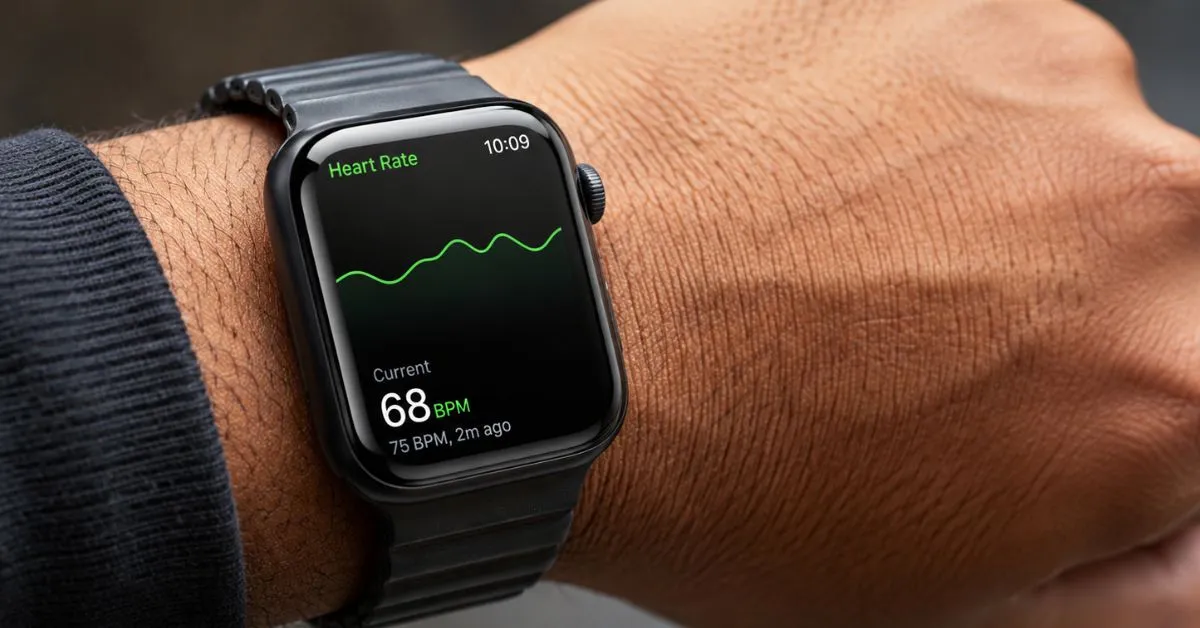
here is quick answer for Do Apple Watches Cause Cancer?
Quick Answer
- No strong scientific evidence links Apple Watch use to cancer. The wireless signals it uses are non ionizing and too weak to damage DNA.
- The real, smaller concern is PFAS (“forever chemicals”) found in some rubber watch bands, which relates to skin irritation, not cancer.
- Choosing safer bands and following a few simple habits can reduce any worry about Apple Watch and cancer almost completely.
Why People Ask If Apple Watch Causes Cancer? Understanding the Fear
No. Answer: The Apple Watch gives you cancer. The fear stems from a confusion between the weak, non ionising wireless signals and the cancer causing ionising radiation used in X-rays and other medical imaging.
Ever been in the middle of a workout, looked down at your wrist and thought what is that little screen actually doing to my skin? You’re not alone.
More people than ever are wearing an Apple Watch all day and nite. It’s natural to wonder if an Apple Watch causes cancer because it sits so close to the skin and uses wireless signals. Usually that fear is caused by conflating two very different things: radiation and chemicals.
To be honest most tech health scares are all the same. A scary headline shows up first, and the actual science trickles in months later, quietly, once nobody is paying attention anymore.
I’ve watched this cycle play out with WiFi routers, microwaves, and now wearables, and it rarely ends with the scary version being true. Once you separate radiation from chemical exposure, the whole Apple Watch and cancer question gets a lot less scary.
Speaking of your watch’s health, don’t forget its battery too. We built a free Apple Watch Battery Diagnostic Tool right on this page , just tap the button below to instantly check your battery health, charging cycles, and overall condition.
Apple Watch & EMF Radiation: Is The Wireless Signal Cancerous?
Answer: No. Current research finds that signals from the Apple Watch are in the non ionizing category, the same low energy class as FM radios and baby monitors, and that “there is no proven mechanism by which they could cause cancer.”
Apple Watch uses Bluetooth and WiFi and sometimes cellular to connect. All of these use radio waves, which are a type of electromagnetic frequency, or EMF.
This is the main reason people ask if Apple Watch causes cancer. So let’s look at the actual science instead of the headlines.
Ionizing vs Non Ionizing Radiation (Simplified)

There are two forms of radiation: ionizing and non ionizing. Ionizing radiation such as X-rays has sufficient energy to break chemical bonds and damage DNA, possibly causing cancer.
Bluetooth and WiFi signals are examples of non ionizing radiation and are far weaker. It simply cannot break DNA bonds.
Your Apple Watch only uses non ionizing radiation. That is the same low energy signal type used by baby monitors and FM radios. So when people ask whether Apple Watch causes cancer through radiation, the physics just does not back that claim up.
Bluetooth, WiFi & Cellular Emission Levels
The wireless emissions from an Apple Watch are extremely low power, especially compared to a phone pressed against your ear. Bluetooth alone is one of the weakest wireless signals in daily use, which shrinks any theoretical risk of Apple Watch causing cancer even further.
Even cellular Apple Watch models, which use slightly stronger signals, still stay far below limits considered unsafe for humans. Wearing your watch every day simply does not add up to dangerous exposure.
Apple Watch SAR Limits Explained
SAR, or Specific Absorption Rate, measures how much radio frequency energy a body absorbs from a device. Apple tests every watch model to keep SAR values well below the legal safety limit the FCC requires before it can even be sold.
Because Apple Watch models pass strict SAR testing, there is no verified case of normal use causing harmful radiation exposure. That is another reason experts do not treat Apple Watch and cancer as scientifically connected.
What Health Authorities Say
Organizations such as the World Health Organization, the American Cancer Society and the FCC have studied radio frequency exposure from common wearables and phones. None of them currently classify normal smart watch use as a proven cancer risk.
I’ll be honest, when three separate, independent health authorities land on the same conclusion, that carries real weight.
It is not proof of zero risk forever, but it is far more reassuring than a random forum post. And if you’ve spent any time on wellness forums you already know how low that bar can be.
All of these groups agree that more long term research is always good. But the thing is, with the evidence we have today, the claim that Apple Watch causes cancer is simply not backed up by data from trusted medical sources.
The PFAS Controversy: Toxic Watch Strap Chemicals

Short answer: Radiation is not the real concern. Some synthetic rubber watch bands contain PFAS, or “forever chemicals,” which raises legitimate questions about long term skin exposure, though no study has proven a direct cancer link.
Radiation is not the real concern here. PFAS chemicals in some watch bands actually deserve a closer look, and this is the one part of the Apple Watch cancer conversation with some genuine science behind it.
What the Notre Dame Study Found
A study from the University of Notre Dame tested several smartwatch and fitness tracker bands. It found PFAS, sometimes called “forever chemicals,” in many synthetic rubber bands, including some fluoroelastomer bands.
PFAS earned that nickname because they take an incredibly long time to break down, both in the environment and inside the body. This is exactly what sparked new questions online about a possible Apple Watch cancer link through the band material.
Can PFAS Enter the Body Through the Skin
Fluoroelastomer is a soft rubber like material that is often used in bands because it is sweat resistant and durable. Researchers believe PFAS can transfer from these bands onto skin, especially with heat and sweat during a workout.
Small amounts absorbed through skin over years is the real question researchers are still chasing down, not sudden or severe illness.
It is still far too early to say this proves any Apple Watch cancer risk. My personal take? It is worth a little caution, but not worth losing sleep over.
Skin Irritation vs. Cancer Risk
So does that mean your rubber band is secretly dangerous? Not exactly.
It helps to separate two very different reactions: contact dermatitis and long term chemical exposure. Contact dermatitis is a mild skin rash or irritation, and it is far more common, and far better understood, than any cancer risk.
So far, no study has proven that PFAS from a watch band directly causes cancer in humans. The honest, current answer to “does Apple Watch cause cancer through PFAS” is: not proven, but still worth staying cautious about.
Safe Watch Band Guide: Healthy Choices

Short answer: Lowest PFAS risk with stainless steel, titanium, nylon loop, and genuine leather bands and highest PFAS risk with cheap fluoroelastomer rubber bands. Matching material to how and when you wear your watch is the simplest way to lower exposure.
Since band material is the one area with real chemical questions, choosing your Apple Watch band wisely is a smart, simple step, even without a confirmed Apple Watch cancer risk. The table below breaks down how the most common band materials compare on PFAS risk, breathability, and where each one makes the most sense.
| Band Material | PFAS Risk | Breathability | Best Use Case |
| Fluoroelastomer (Rubber) | Higher : most PFAS detections in lab testing | Moderate; can trap sweat against skin | Short workouts where cost matters more than chemical exposure |
| Nylon Loop | Low : little to no PFAS content | High; woven fabric breathes well | All day wear, hot climates, sensory sensitive users |
| Stainless Steel | Very low : no PFAS coating typically used | Low; metal retains heat and moisture | Office wear, formal settings, minimal skin contact time |
| Genuine Leather | Very low : PFAS not a standard treatment | Moderate; softens with wear but absorbs sweat | Everyday casual or business wear, dry climates |
Bands to Be Cautious With
Cheap, third party synthetic rubber bands are more likely to carry higher PFAS levels than official Apple bands. The ones to beware of are the very flexible, shiny rubber bands that are sold at rock bottom prices.
If the band feels too soft, unusually shiny or smells strongly of chemicals, it’s a sign to look for a safer alternative, rather than persisting with daily use.
Safer Band Options
I think steel and titanium bands are really safe to wear. They also have nylon loop and genuine leather bands which are choices too. These bands do not have a lot of stuff in them.
I would rather pay an extra for a stainless steel band. I do not want to take a chance with a band that I’m not sure about. I will be wearing it on my skin for eight hours every day. I want to make sure it is safe. I do not want to wear something that could hurt me. Stainless steel bands are a choice, for me.
Is saving a few dollars on a cheap rubber band really worth wondering about it later?
These sturdier options are also great for people managing sensory needs, including many users who rely on their watch for daily routines , you can read more in our guide on Apple Watch ADHD workflow tips for a full breakdown of helpful features.
Switching to one of these materials is an easy way to lower any chemical exposure while keeping full use of your Apple Watch every day.
How to Reduce Radiation and Chemical Exposure

Short Answer: You can reduce radiation and chemical exposure with a few small habits like using Airplane Mode overnight choosing a safer band material and giving your wrist regular breaks, from constant skin contact.
Current evidence does not support the idea that Apple Watch causes cancer. Still a few small habits can reduce your exposure and give you extra peace of mind and honestly they take almost no effort
Adjust Your Settings
Turning on Airplane Mode during the night or any time you do not need to receive notifications reduces wireless signal activity. You can also turn off cellular and WiFi during times of the day when you do not need them.
Should You Wear It to Bed?
Many people decide to take their Apple Watch off at night allowing their skin a real break from being in contact, with the band.
Why not let your wrist breathe for eight hours just like you would with a ring or a bracelet?
If you still want to get sleep data without wearing the Apple Watch check out our guide on how to track sleep without an Apple Watch for a few simple alternatives.
This small change also reduces long term skin contact with band materials, which is the main factor behind any real Apple Watch cancer worry.
Hygiene and Skin Care Tips
Clean your watch band and wrist regularly after workouts or heavy sweating. Give your wrist a break, from the band every day and let your skin dry fully before strapping the watch back on.
Frequently Asked Questions
Does the Apple Watch Series 9 or Apple Watch Series 10 or Apple Watch emit more radiation?
No. All current Apple Watch models follow the strict SAR safety limits so newer models are not riskier when it comes to Apple Watch cancer concerns.
Is it safe to wear an Apple Watch all day and night?
Yes, for most healthy adults, daily wear is considered safe. Some people even use their watch for wellbeing support, including tools like our Apple Watch grief support guide and health tracking such as checking body temperature. You can learn more in our article on whether Apple Watch can take your temperature.
Are official Apple bands safer than third party Amazon bands?
Generally, yes. Official Apple bands go through stricter testing, while some cheap third party bands have shown higher PFAS levels in independent lab tests.
Can children safely wear an Apple Watch?
Most pediatric and radiation experts see no added Apple Watch cancer risk for kids from normal daily wear, since the SAR limits apply to every user, not just adults. That said, choosing a safer band material matters even more for a child’s more sensitive skin.
Does a screen protector or watch case block harmful radiation?
Not really, and you do not need one for that reason. Since Apple Watch radiation levels are already non ionizing and low power, there is nothing dangerous left to “block” in the first place.
Final Verdict: Should You Stop Wearing Your Apple Watch?
Short answer: No you do not need to stop wearing your Apple Watch. This is because the Apple Watch is still a device. So you can keep wearing your Apple Watch. The Apple Watch is fine to wear. There is no solid proof it causes cancer through radiation, and the smaller PFAS concern from certain bands can be managed by choosing safer materials.
Based on current science, there is no solid proof that Apple Watch causes cancer through radiation. The signals it uses are simply too weak and non ionizing to damage human DNA in any meaningful way.
The more realistic issue is PFAS in certain rubber bands, and that is a chemical exposure question, not a confirmed Apple Watch cancer diagnosis.
Choosing safer bands, taking breaks, and using helpful features like fall detection for elderly users lets you enjoy your watch’s benefits with a lot more confidence.
At the end of the day, you do not need to stop wearing your Apple Watch out of fear of cancer. A few simple, informed choices are enough to keep both you and your watch working safely together, every single day.